Get words down
Start from a Mac field. Speak, stop and keep a faithful transcript. Review the original whenever you need it.
Mac dictation → WorkbenchGUIDE
The public download is signed and notarized Preview 4. It adds compact Snap & Talk ordering, native Read Selection and reviewed library import, and includes the scene, persona and Chrome companion improvements. The release integration is merged; the release notes identify the exact source and checks. The product handbook separates implementation from proposals.
PRODUCT GUIDE · 2.0 PREVIEW
Dictate on your Mac. Explain a browser screen. Present your phone. Workbench gives each job a small set of controls, with one app for setup and saved work.
Start from a Mac field. Speak, stop and keep a faithful transcript. Review the original whenever you need it.
Mac dictation →Present the phone inside a saved scene. Type and use Dictation on the physical phone.
Phone presentation →Draw attention to a detail. Add a persona card. Return to the browser and carry on.
Browser overlays →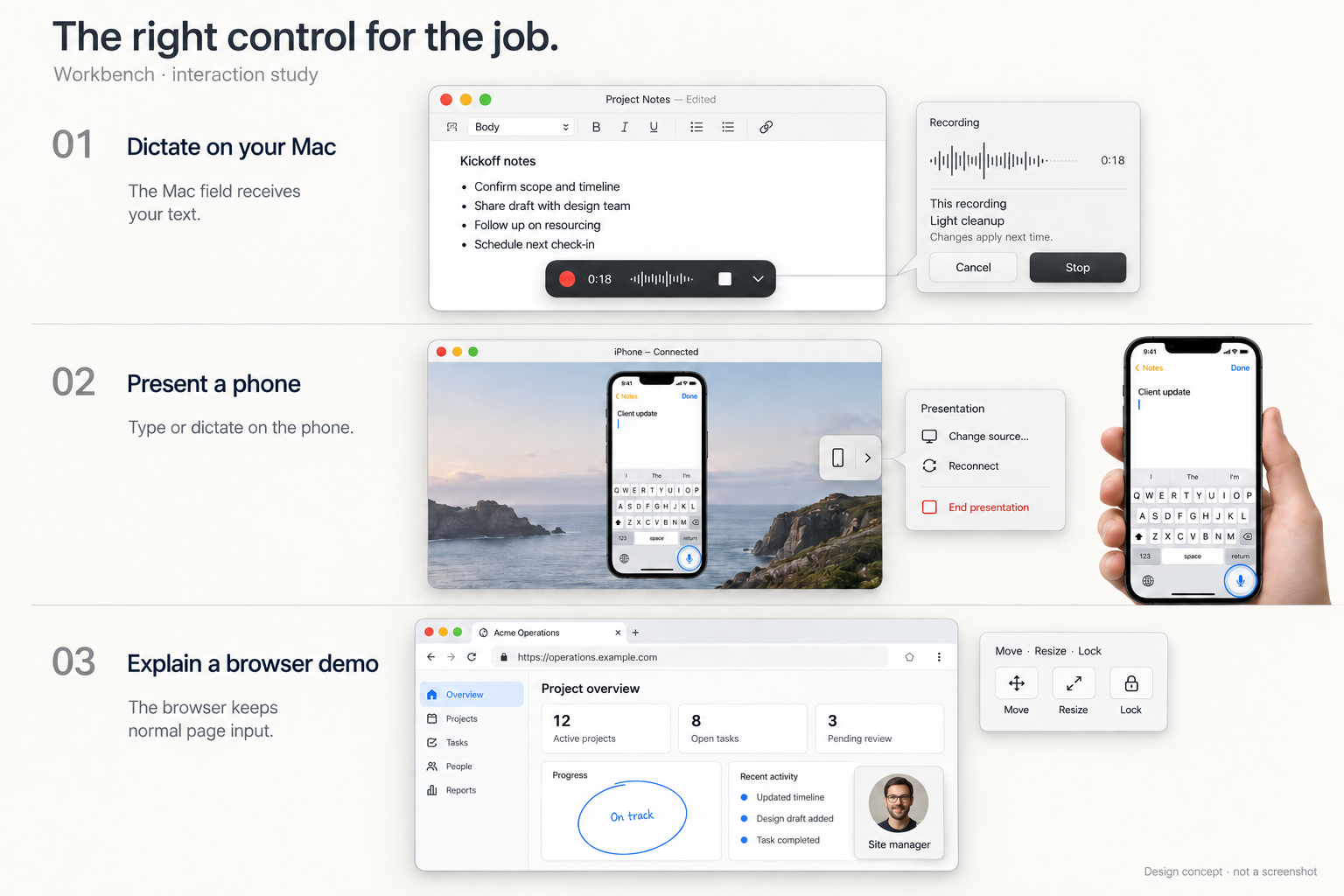
ONE APP · DISTINCT CONTROLS
The app window is the place to prepare and review. The menu bar gets you into a task. A floating control stays with the task that created it.
| Surface | Open it | What belongs here | When you close it |
|---|---|---|---|
| App window | Open Workbench, or choose it in the menu bar | Drafts, history, models, shortcuts, scenes and saved resources | Saved work stays. The menu bar remains available. |
| Menu bar | Click the Workbench icon, or use your configured shortcut | Launch a tool, see its state, open settings | The launcher closes. An active recording continues. |
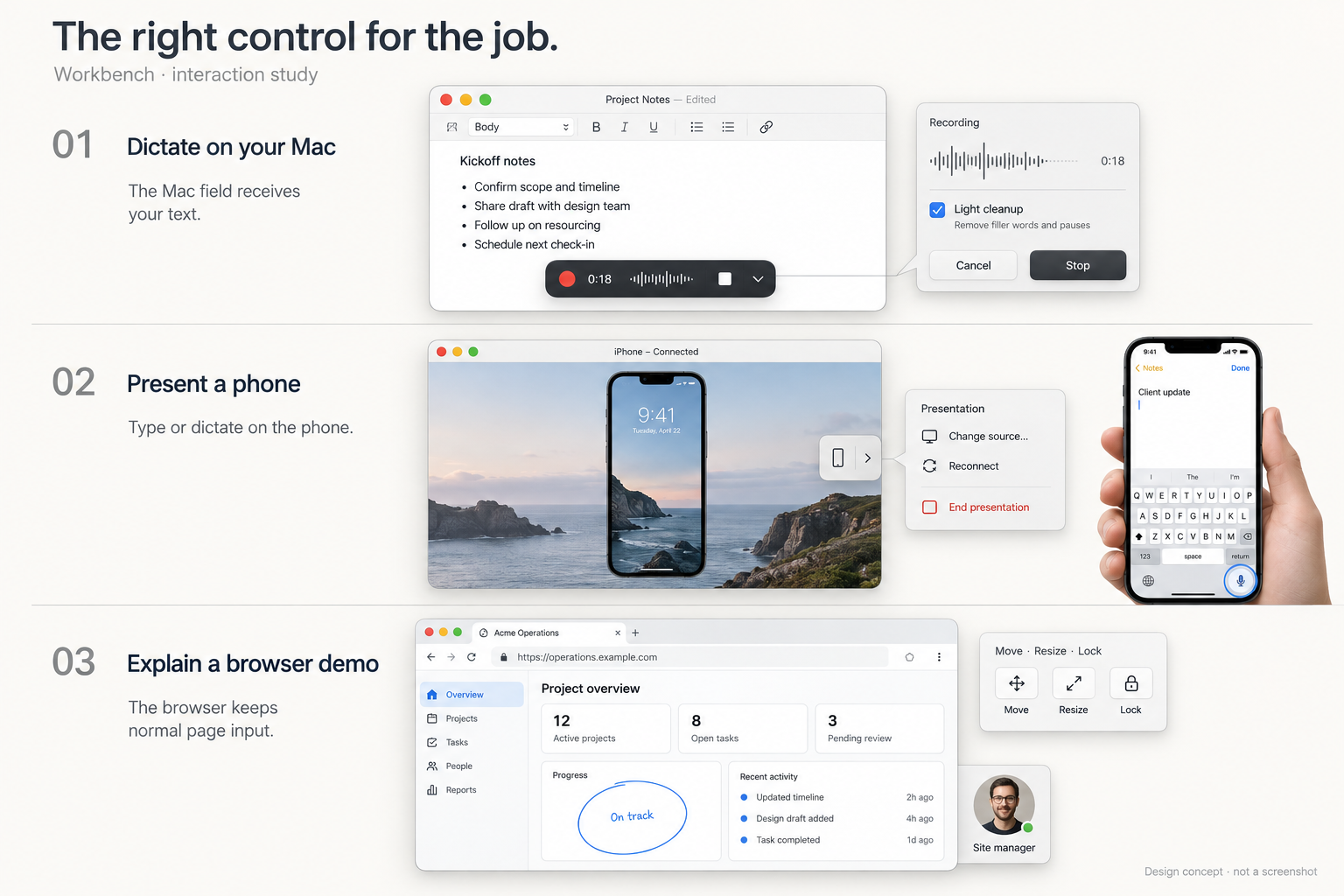
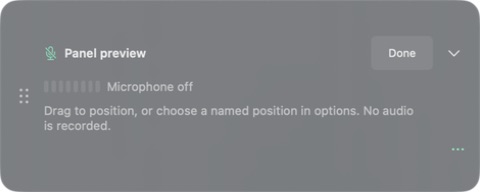
| Recording panel | Start Mac dictation | Input level, time, Stop; expand for details and Cancel | Collapsing keeps recording. Stop finishes; Cancel discards. |
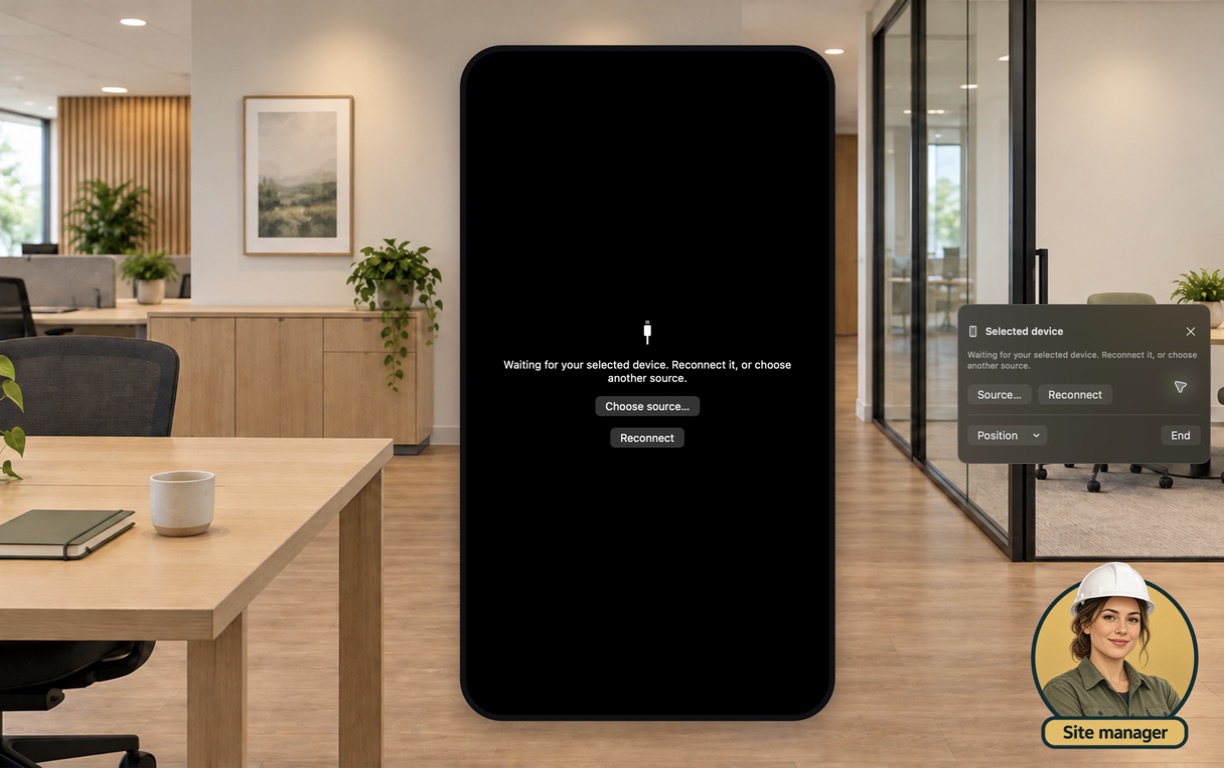
| Presentation tile | Start a device presentation | Phone icon and chevron; click for source, reconnect, position and end | Escape closes open controls first; a further Escape ends the presentation. |
| Persona / annotation | Explicitly show a persona or start drawing | Audience-facing artwork and marks | Hide leaves saved artwork intact. Clear is a separate action. |
Recording and presentation controls each remember their own position. Use a named position in its menu, or drag toward a corner or edge centre to snap. Click to open controls; hovering is never required for a task.
CORE UTILITY
Speech recognition turns audio into words. Workbench includes local recognition and can connect to a compatible local speech server. Text refinement works on those words afterward. Improving one does not require replacing the other.
| Choice | Intended result | Requirements |
|---|---|---|
| Original | Keep the recogniser’s words, with your saved dictionary replacements. The original stays in history. | No text model |
| Light | Conservative cleanup of supported fillers, spoken corrections and lists. | Built-in rules; default |
| Natural | Local punctuation refinement with strict word, number and list checks. If unavailable or rejected, retain conservative cleanup. | Available Apple Intelligence, or an explicitly selected local Ollama model |
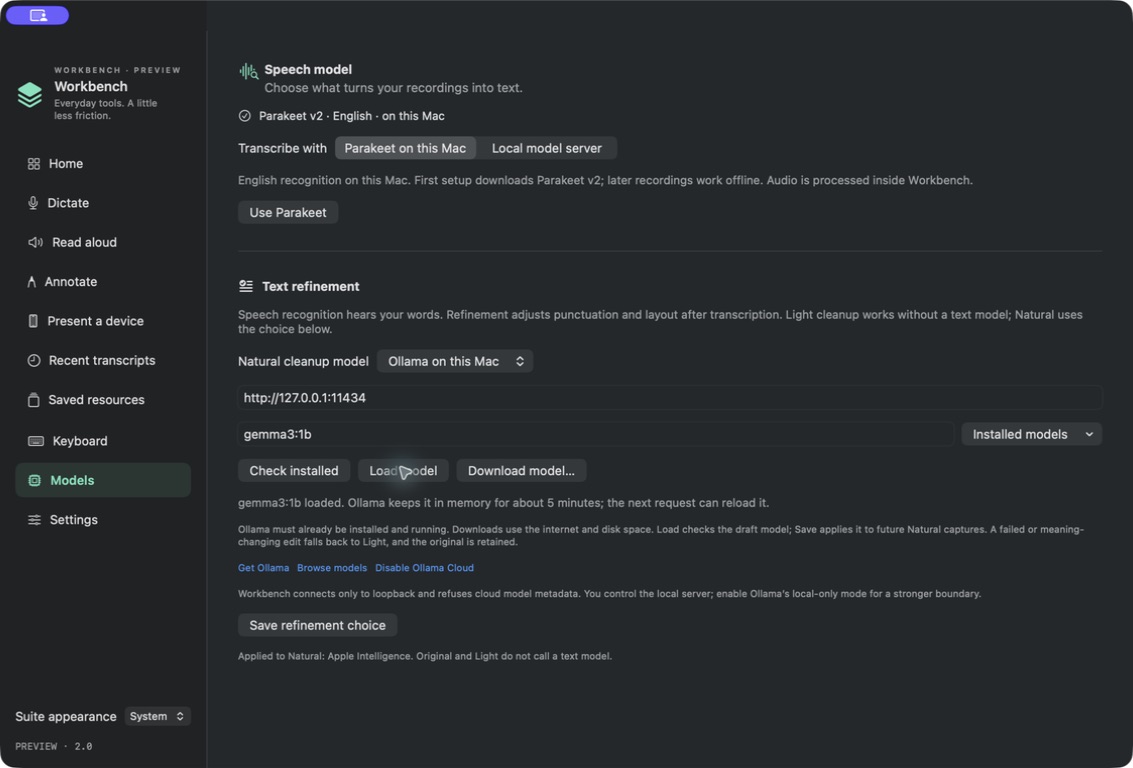
Open Models for separate speech and text-refinement settings. Optional Ollama refinement needs Ollama running on your Mac. Choose and download a local model there, then load it when ready. Workbench does not install Ollama or silently switch to an online model. It refuses cloud-model metadata before sending text; your local server remains under your control.
Settings are captured when you start recording, import audio or begin a cleanup operation. Changing cleanup, word replacements or delivery preferences applies to the next operation. The result states which cleanup actually ran; the original remains recoverable. Model checks reduce unwanted changes but cannot guarantee perfect text.
In Dictate, select a mistaken word or phrase and choose Remember correction…. Enter the spelling you want, check the draft preview, then save. For example, stage mark becomes StageMark in this draft and matching future dictations. With no selection, enter both phrases yourself.
The original and earlier captures stay unchanged. The receipt offers Undo; if you have since edited the draft, Undo keeps those newer edits. Saved corrections live in Dictionary. Nothing is pasted again automatically.
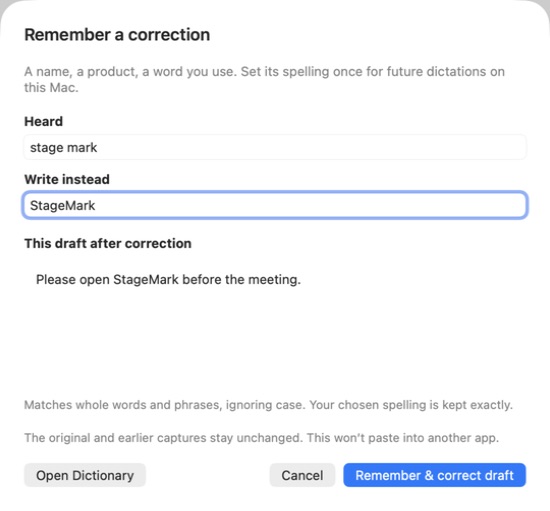
The basic controls are already here: local capture, small and expanded panels, cancellation, history and recovery. The larger gap is the finish around the text: contextual insertion, familiar names and first-use confidence. We explored the installed competitors’ settings and correction forms, and read their official docs; this was not a speech-accuracy benchmark.
| Priority | Job | Status |
|---|---|---|
| 1 · Remember corrections | Fix a recurring name where you notice it, with a preview and Undo | Included in this Preview |
| 2 · Fit the surrounding text | Handle spacing and capitals at the insertion point | Next candidate; field compatibility needs testing |
| 3 · First successful dictation | Guide setup through a verified first paste | Next candidate; needs fresh-user testing |
Flow’s dictionary and Superwhisper’s replacements both support deliberate corrections. Workbench reuses its local dictionary and keeps that choice visible. Read the comparison and implementation contract ↗
Build Record Audio → Transcribe with Workbench → Create Note, or another text action. Apple’s action owns recording and cancellation. Workbench receives an audio file and returns text; its Mac recording panel is not a second recorder for that workflow.
Capture recovery · current source Preview. A failed save keeps the recording and text for recovery. Retry saving saves the capture without running the model or replaying automatic paste. Quit keeps unfinished recovery; Discard recovery… is an explicit choice in Dictate. If recovery writes fail too, copy or export the text before quitting. A newer saved draft stays intact after restart. Current verification →
FORM FACTOR MATTERS
Connect an unlocked, trusted iPhone over USB. In Present a device, choose a scene and start Present, then choose the phone in Source. The small phone tile opens by click or ⌘/. It contains presentation controls.
To enter text, tap a field on the physical phone. To dictate, tap its keyboard’s Dictation button. Tapping the field alone does not start Dictation. Workbench displays the device’s video; it does not send Mac keystrokes, clicks or microphone input back to it. Apple’s iPhone Dictation guide ↗
Mac dictation remains a separate job when you explicitly choose a Mac field. Starting it from Workbench’s phone presentation is blocked with an explanation, so it cannot appear to type on the phone.
Demonstrating a voice agent or using a workplace Mac? Open Connection & audio… before the call. Workbench USB is video only. Choose a route, rehearse audio and switch safely →
Workbench can open Apple’s separate apps. iPhone Mirroring provides its own supported input flow and keeps the nearby phone locked; Apple says the phone’s microphone and camera are unavailable there. QuickTime can show a connected device. Workbench does not embed or control either app. iPhone Mirroring ↗ · QuickTime capture ↗
Import finished artwork or make an editable portrait card in Personas and overlays…. Keep the simple Show one card workflow, or use Prepare presentation to place several copies and choose an ordered set of groups. Each copy can be moved, sized, hidden and locked independently. A compact click menu follows you between apps.
For a mobile presentation, place a persona inside its saved scene. These independent native overlays are for whole-display demonstrations, and are not attached to browser tabs. Multiple overlays are included in Preview 4. Preparation, controls, actual checks and limits →
Download the fictional Site manager example. Use transparent PNG or WebP for a cut-out card; a baked checkerboard stays part of an imported image.
Whole-display sharing includes visible Workbench overlays and controls. A browser-tab share excludes separate native windows. A scene’s persona is part of the scene rendering. Teams and Zoom may capture individual windows differently; check from a receiving device before a real presentation. Workbench does not promise invisible presenter controls.
SCENE PREPARATION
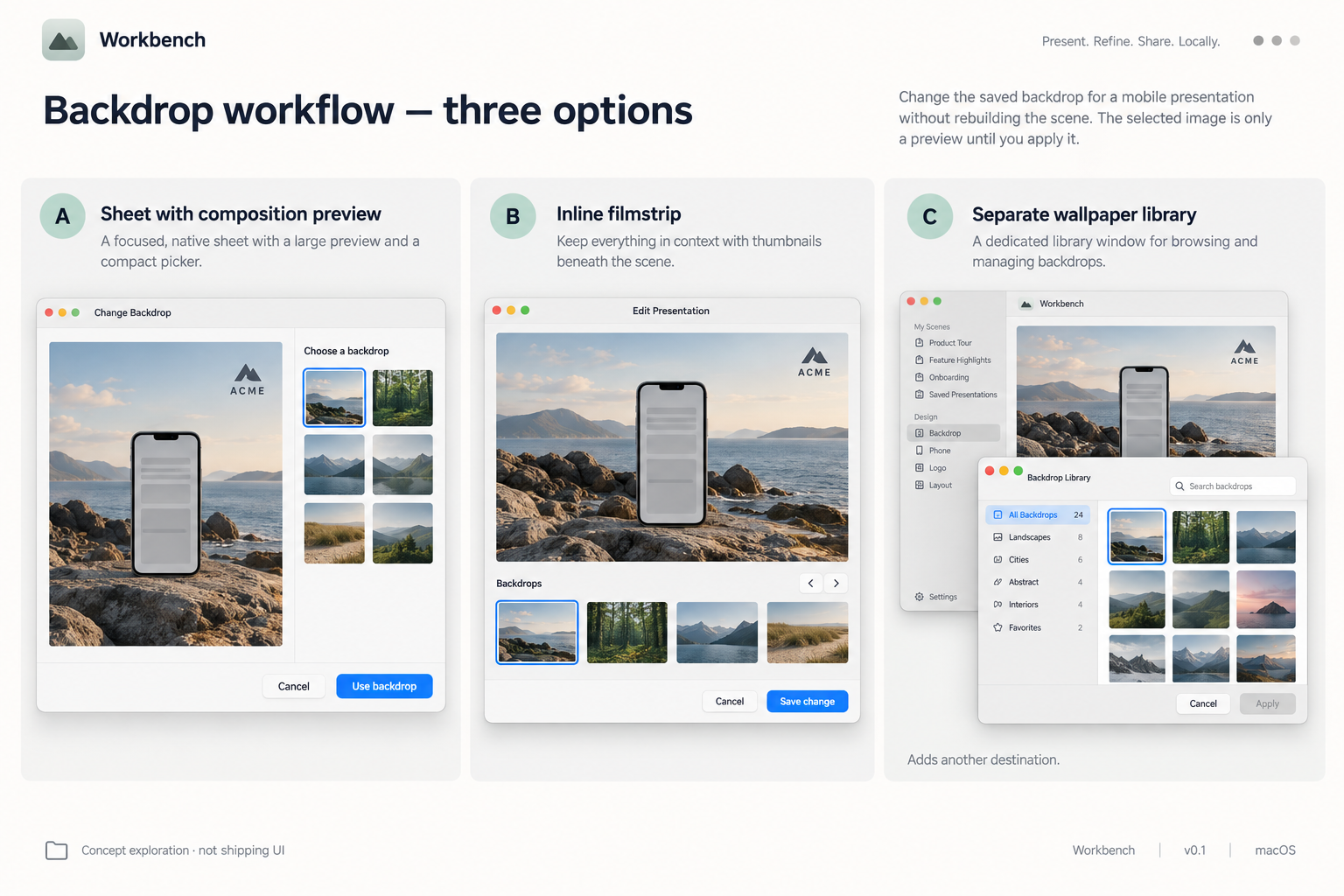
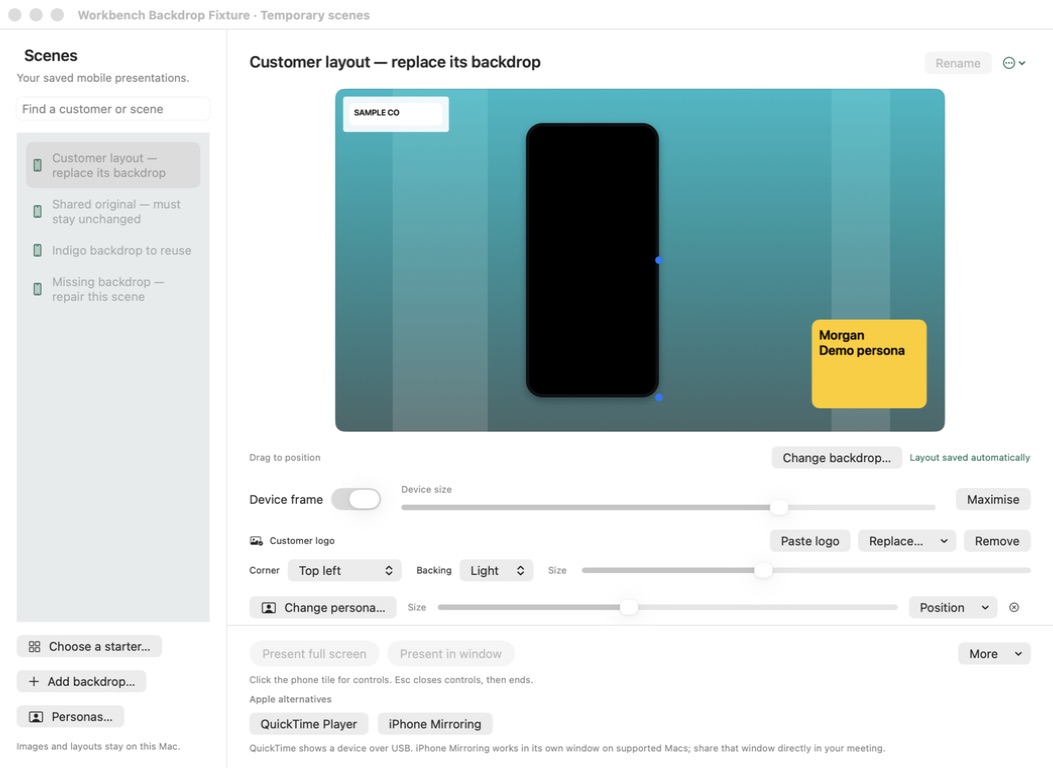
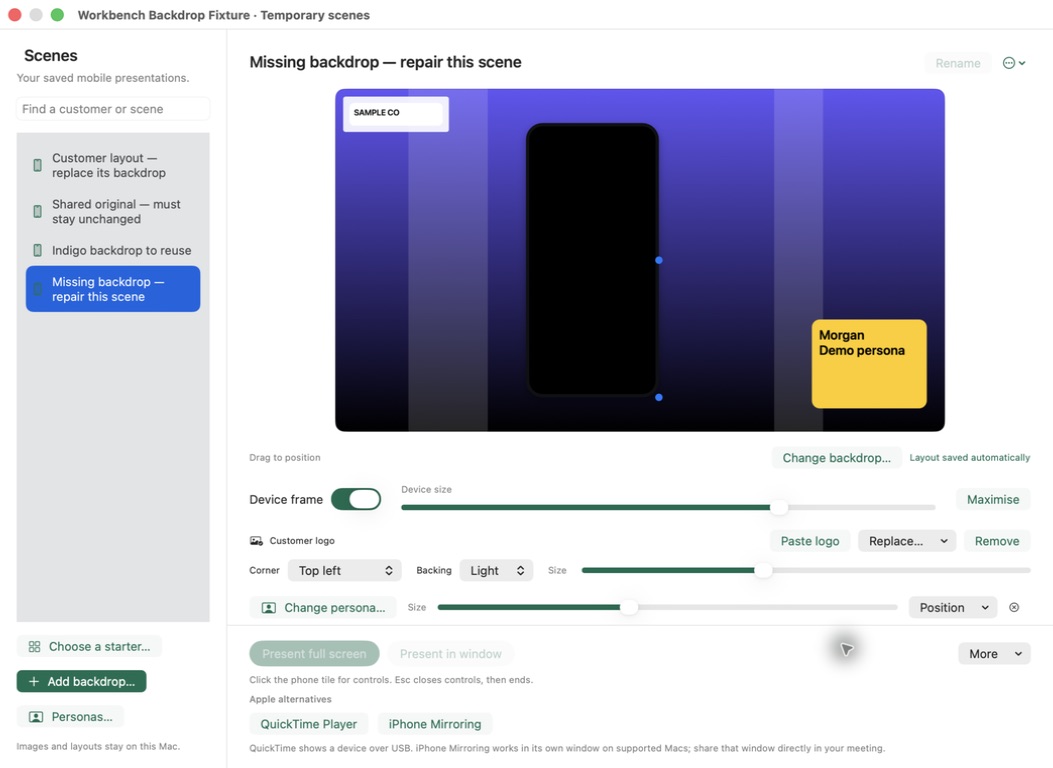
Changing a picture should keep the device, logo and persona you already positioned. In Present a device, choose Change backdrop…. Try an image from your scenes, a bundled starter or a local file. Adjust the crop, then choose Use backdrop. Cancel keeps the saved scene unchanged.
The same action repairs a missing image. It changes the saved scene; the desktop and an already-running presentation stay as they are. Add backdrop still creates a new scene.
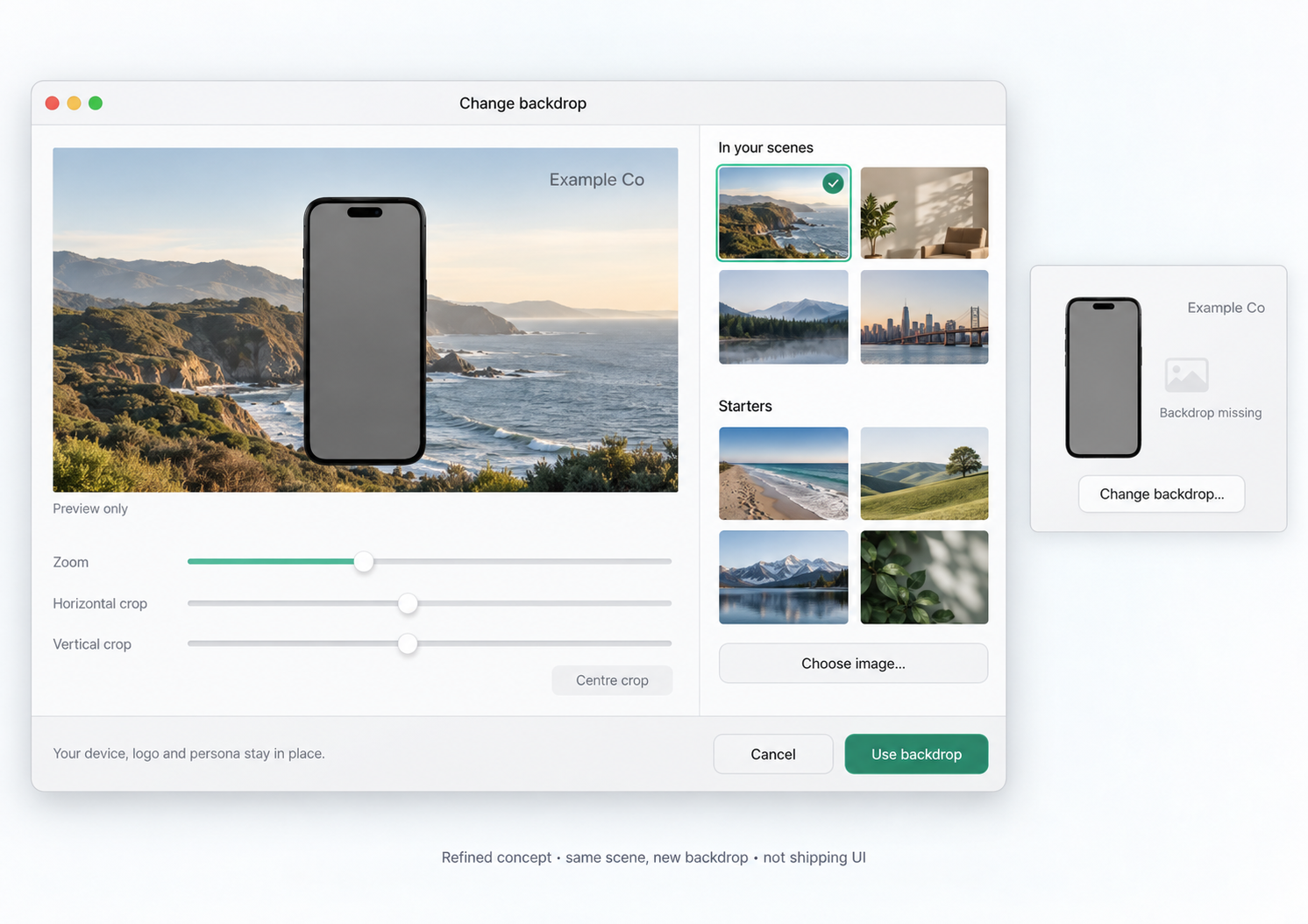
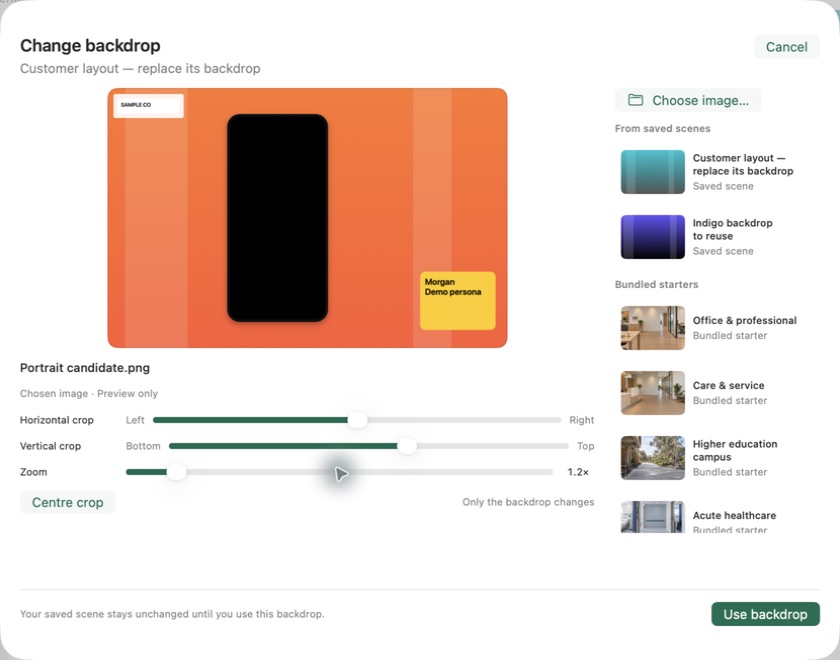
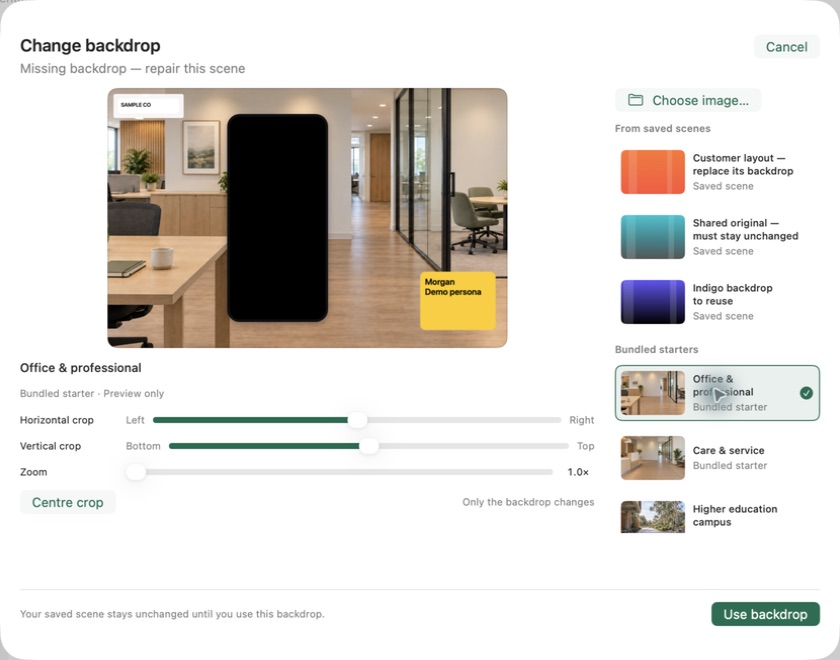
Native checks confirmed picker cancellation, Escape, keyboard Apply, retained scene identity and missing-image repair. Archive readback confirmed unchanged foreground placement and shared originals. No live device or meeting receiver was involved.
| Priority | Useful improvement | Decision |
|---|---|---|
| 1 | Preview and replace a backdrop while preserving the scene | Included in Preview 4 |
| 2 | Dim the backdrop while keeping foreground artwork clear | Parked until contrast examples justify it |
| 3 | Preview the named display and output crop | Validate with a second display |
| 4 | Curate reusable images with source credit | Start with existing local images |
| 5 | Quiet local motion with a reliable still | Included in Preview 4; receiver checks remain |
Apple provides the native wallpaper baseline. Workbench’s direction now includes an independently useful wallpaper experience alongside scene preparation; its dedicated entry and optional motion remain proposed. Read the two journeys and lifecycle contract. We inspected Apple Wallpaper and Plash’s native settings, and reviewed Unsplash Wallpapers, Irvue, 24 Hour Wallpaper and Dynaper. Photo rotation, web wallpaper and time-based imagery solve different jobs; this update focuses on changing a scene without rebuilding it.
Comparison, sources, specification and critical review ↗. Website playback, energy use and multi-display behaviour of competitor apps were not benchmarked.
BUILD ON THE MAC
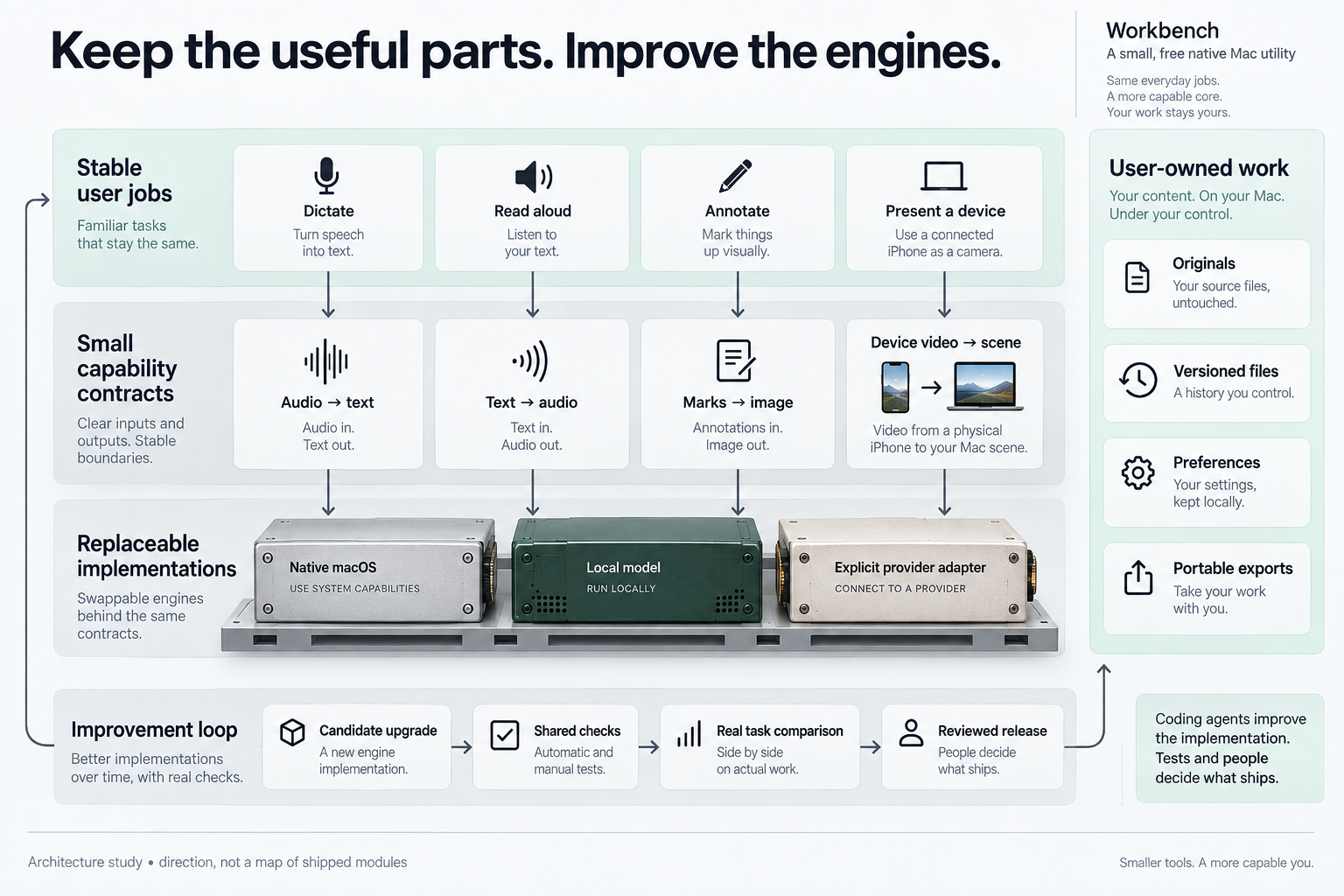
A small utility earns its place through a better repeated task. Workbench builds on native foundations and keeps the added behavior focused.
| Need | macOS already provides | Workbench adds |
|---|---|---|
| Dictation | Dictation in text fields | Choice of local speech engine, conservative cleanup, recoverable originals and reusable transcripts |
| Read text | System voices, spoken content and Services | Explicit selection import into a reviewable draft with audio export, plus optional Speko TTS with automatic routing or an explicit compatible voice |
| Narrate screenshots | Screenshot and Markup | Ordered Snap & Talk sessions with linked narration, recoverable edits and a portable slide-building skill |
| Explain a live screen | Screenshot and Markup | Temporary live-screen annotation and persona cards during a demonstration |
| Show a phone | QuickTime capture and supported iPhone Mirroring | Saved framing, background, logo and persona in a presentation scene |
| Automate a sequence | Shortcuts | A local transcription action that returns text |
| Find and launch tools | Dock, Spotlight, menu bar and keyboard conventions | One discoverable app and configurable, conflict-checked shortcuts |
In Snap & Talk, cancelling a rerecord keeps the earlier narration and its ready status. Capturing another screenshot keeps any narration that finishes in the background. Deleted sections remain recoverable until you explicitly empty Recently Deleted.
To arrange a Snap & Talk session, choose Reorder…. The compact list shows screenshots and narration together. Drag a row to the insertion line, or select it and use Move up / Move down. Choose Save order when ready; Cancel keeps the previous order. Screenshots, recordings and original narration stay with their section.
Snap & Talk's Hand off… action copies a prompt, reveals the session folder and opens Claude, ChatGPT or Codex when installed. You decide whether to grant the app access and paste the prompt; Workbench does not upload or submit screenshots on its own.
Native references: Dictation · Screenshot · Shortcuts. Stock motion backgrounds and logo web discovery remain separate asset-library work; they are not part of this interaction update.
SMALL, USEFUL IMPROVEMENTS
The next step is often a missing control or a clearer handoff. These four changes use the playback, drawing, scene and library systems already in Workbench.
| Utility | 1 · This update | 2 · Idea | 3 · Idea |
|---|---|---|---|
| Read aloud | Scrub existing audio; import selected text through Services | Cancel every generation | Validate installed selected-text handoff |
| Annotation | Copy a board or save its PNG | Native Screenshot handoff | Move an existing mark |
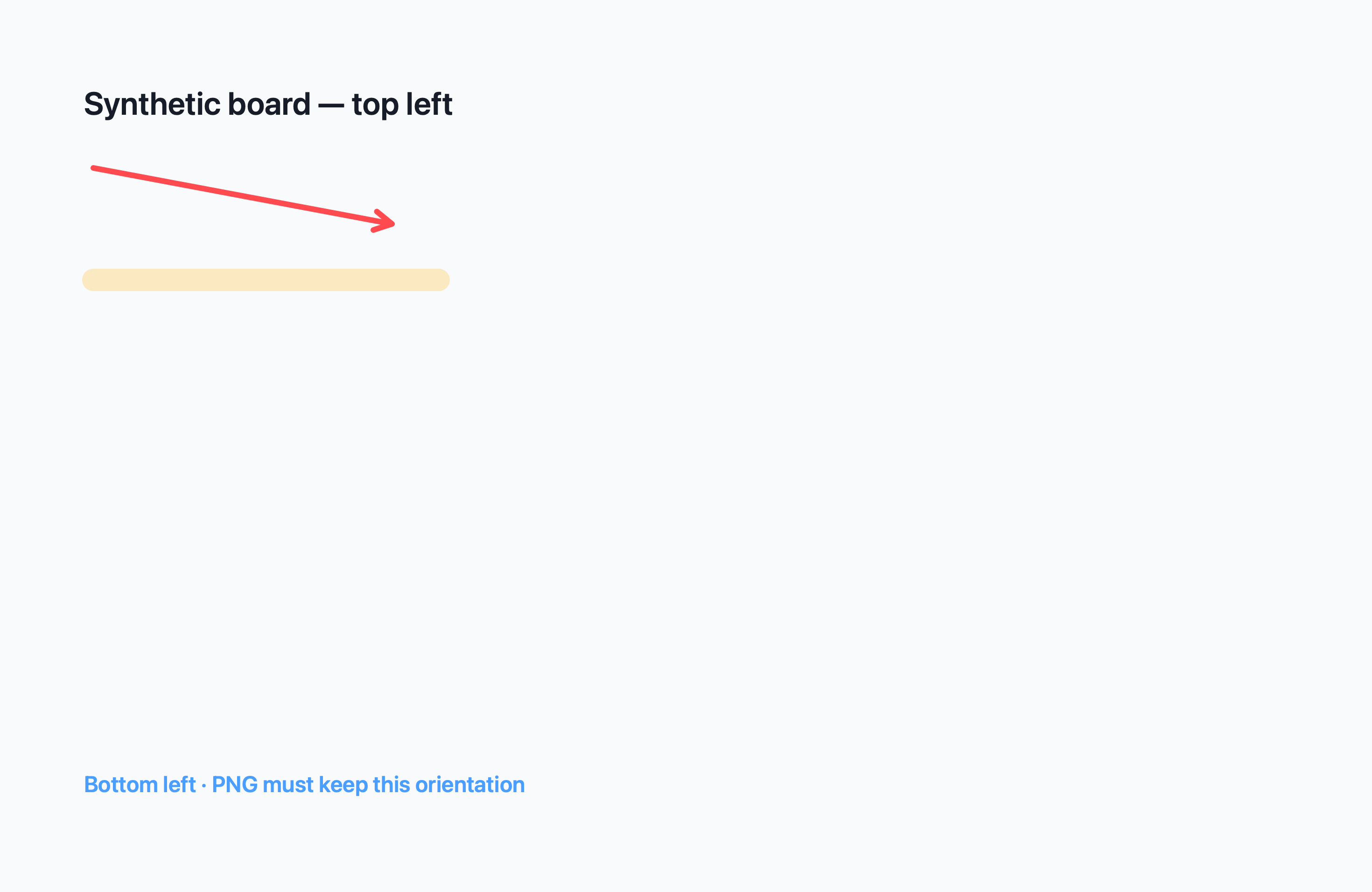
| Presentation | Present in a resizable window; keep the break timer where you placed it | One fresh scene snapshot | Verify the separate timer in a receiving meeting view |
| Saved resources | Search, Quick Look, and review shared-library changes | Try a real exchange with another Mac | Validate exchange demand before adding another library feature |
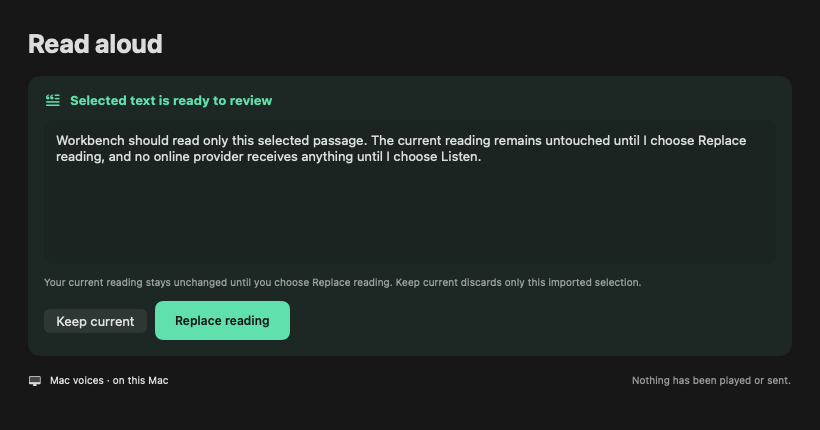
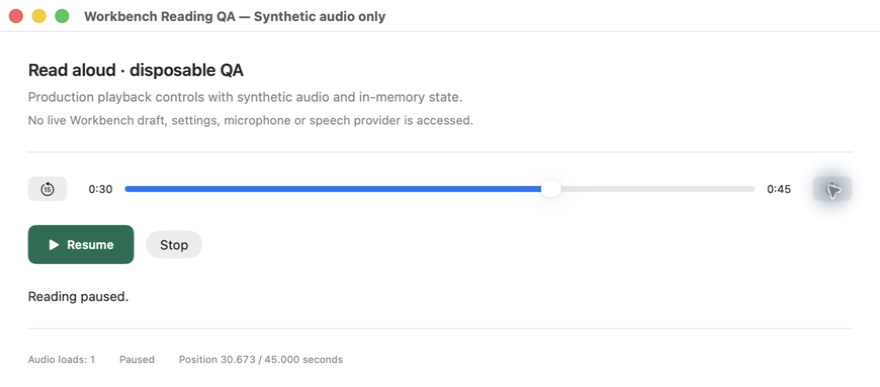
Read aloud: select text in TextEdit or a supported browser, then choose Services → Read Selection in Workbench. A different current draft stays unchanged until you choose Keep current or Replace reading. Importing does not start audio; Speko sends text online only after a separate Listen or Save audio action. You can also pause, seek and resume existing audio without asking the provider to make it again. Board export: Copy board and Save board PNG include the board and its ink. To capture a browser underneath an annotation, use macOS Screenshot.
Presentation: choose Present in window beside the fullscreen action. Use the green Mac control or ⌃⌘F to switch fullscreen while the scene stays active. Drag the separate break timer or use its Position menu; reopening keeps that placement and recovers it onto an available display. Select the scene window in your meeting app if useful, and check a receiver's view. Saved resources: Return copies the selected prompt or opens its link/file from search or the results list. Quick Look previews a supported original file without copying it; Escape closes only that preview. Missing files retain Locate file recovery.
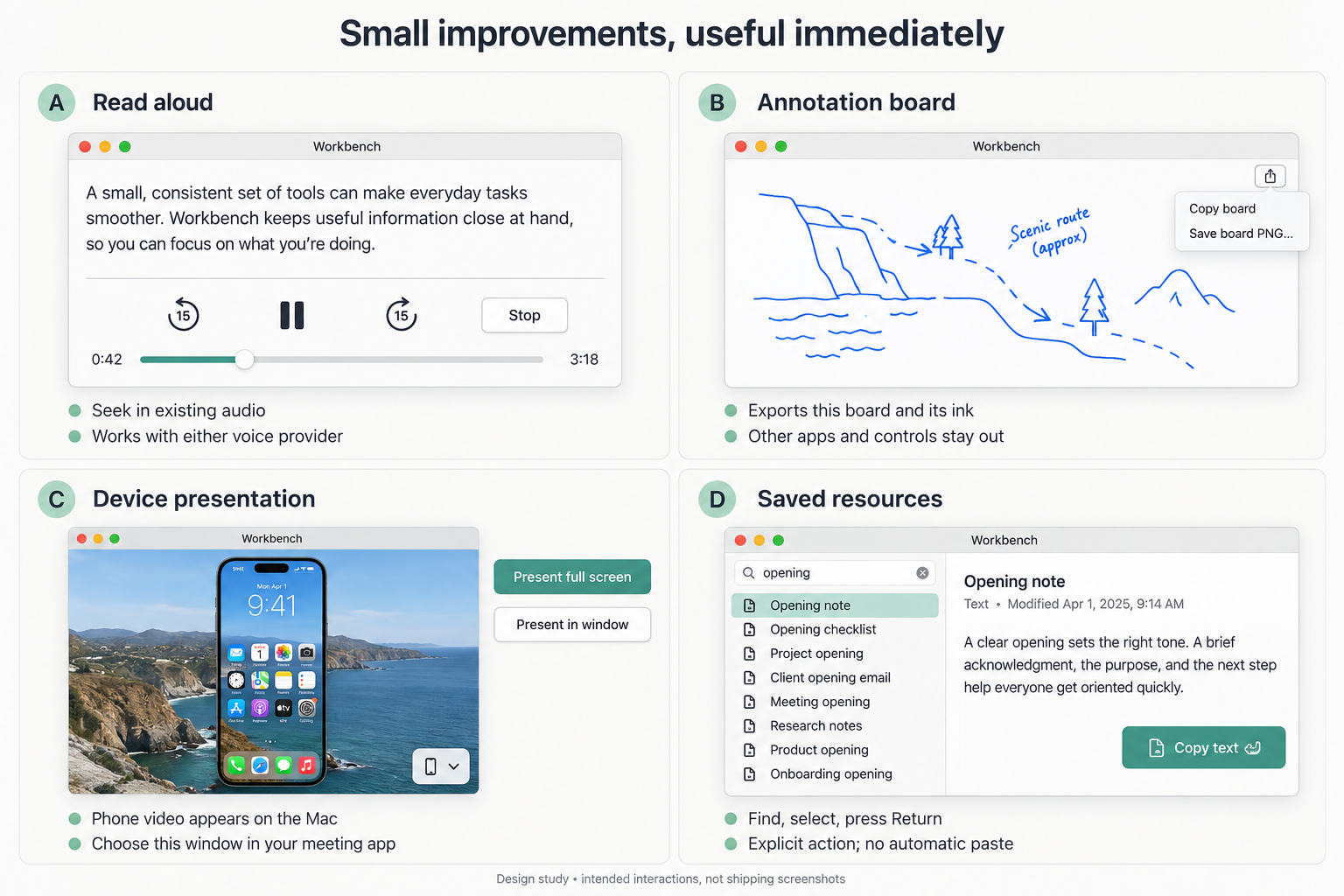
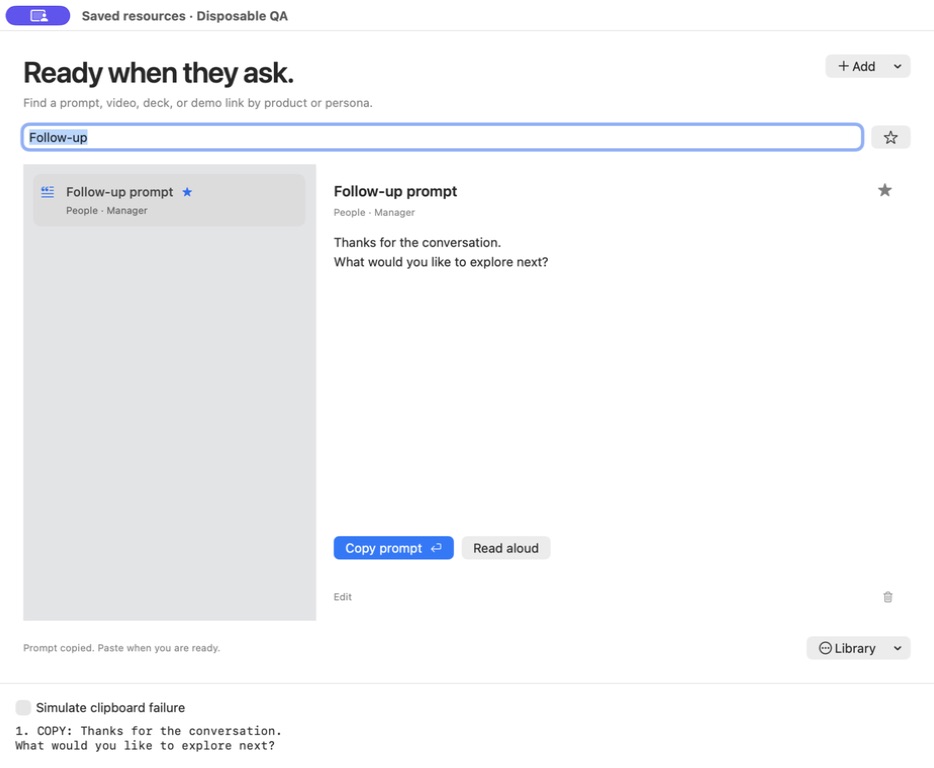
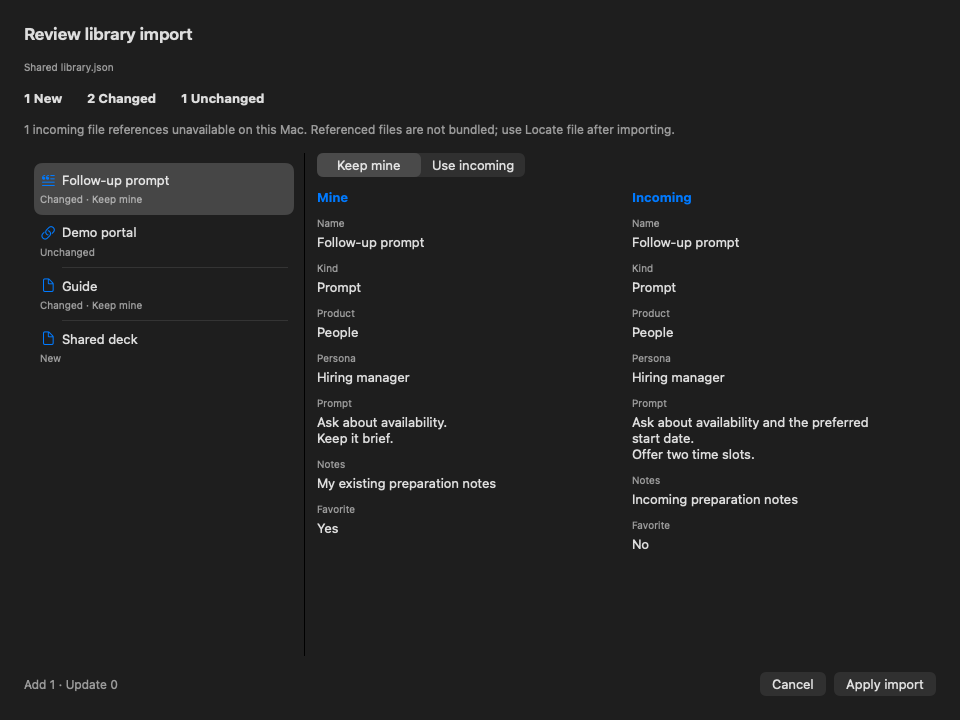
Import a shared library: in Saved resources, choose Library → Import library…. Review New, Changed and Unchanged items. Select a changed row to compare both versions and choose Keep mine or Use incoming, then Apply import. Cancel keeps your library as it was. Files are references, not bundled media; unavailable paths can be repaired with Locate file. Browser profiles and file access stay local to each Mac.
We exercised Apple's Speech and Finder Quick Look on synthetic notes, and reviewed official docs for Speech Central, DemoPro, Presentify, ScreenBrush, Reflector, DeskPad and Raycast. Those commercial apps were not all installed or tested. The rankings are product judgments, not parity or performance claims. Comparison, sources and acceptance limits ↗
Dictation's next two contributions are surrounding-text insertion and one successful first dictation. Every idea states the job, evidence, smallest scope and acceptance checks.
PREVIEW 4 · PRESENTER NAVIGATION
Save a tab as Manager or HR Admin in its Chrome profile. Use Workbench’s Switch to… command or Control–Option–G to return from any Mac app. The same destinations are available in the Chrome extension and Saved resources.
The picker’s labels can appear in a screen share. Passwords stay with Chrome or your existing password manager. Keep Workbench and the participating profiles open. The Mac companion is included in Preview 4. The Chrome Web Store listing is still a draft; extension setup currently uses the source package. Existing users can choose Repair Chrome connection to refresh the native registration. Setup, research and acceptance evidence →
THE COMMODITY STRATEGY
One native app owns the controls and saved work. Recognition, text refinement and speech generation can improve separately. Annotation, device presentation and saved resources keep their own responsibilities. Better coding agents help maintainers deliver changes; they do not automatically change a person's app or active recording.
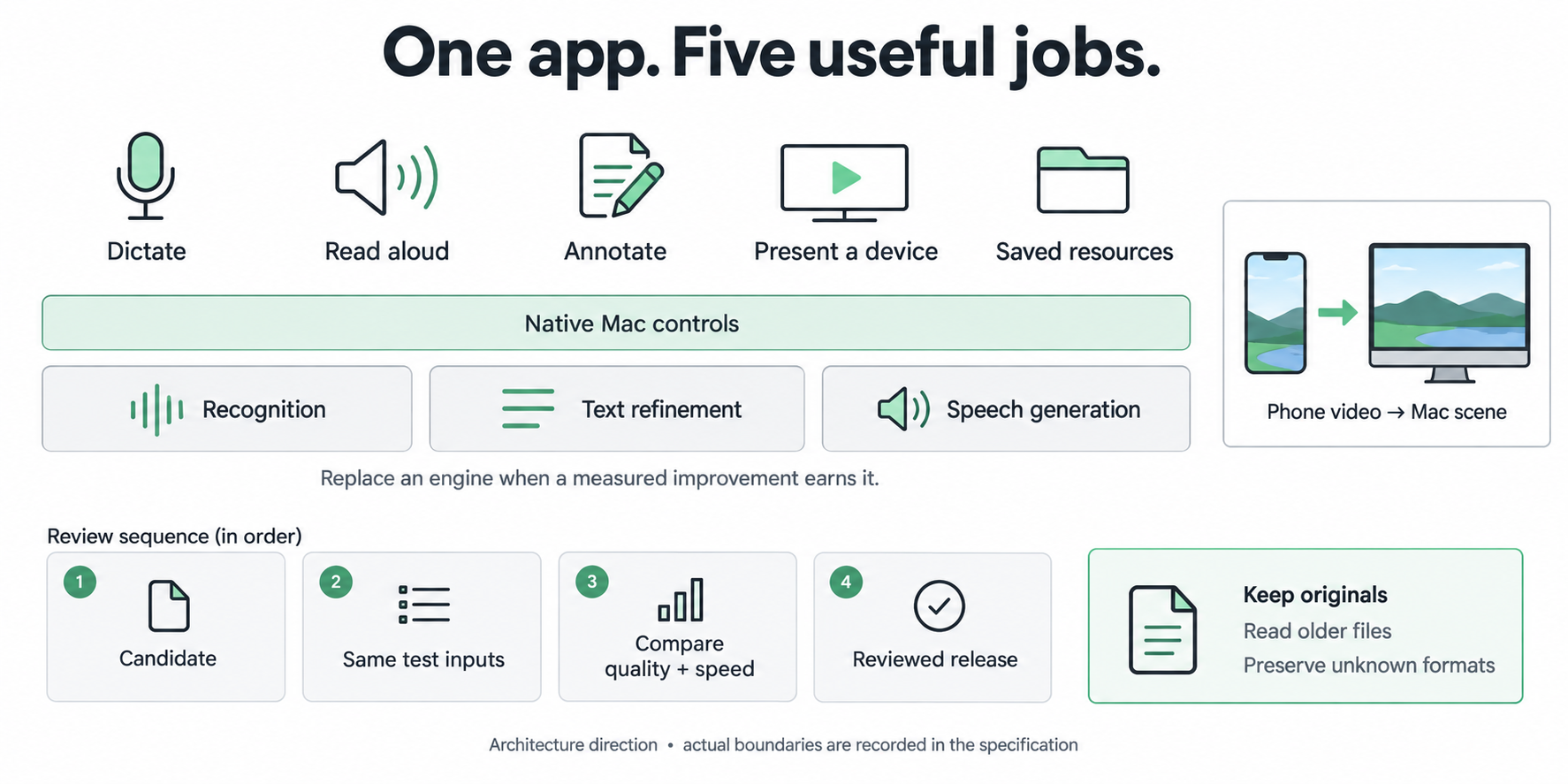
Architecture review and contributor rules ↗ · Model comparison template ↗ · Evaluation corpus idea · Storage evolution idea
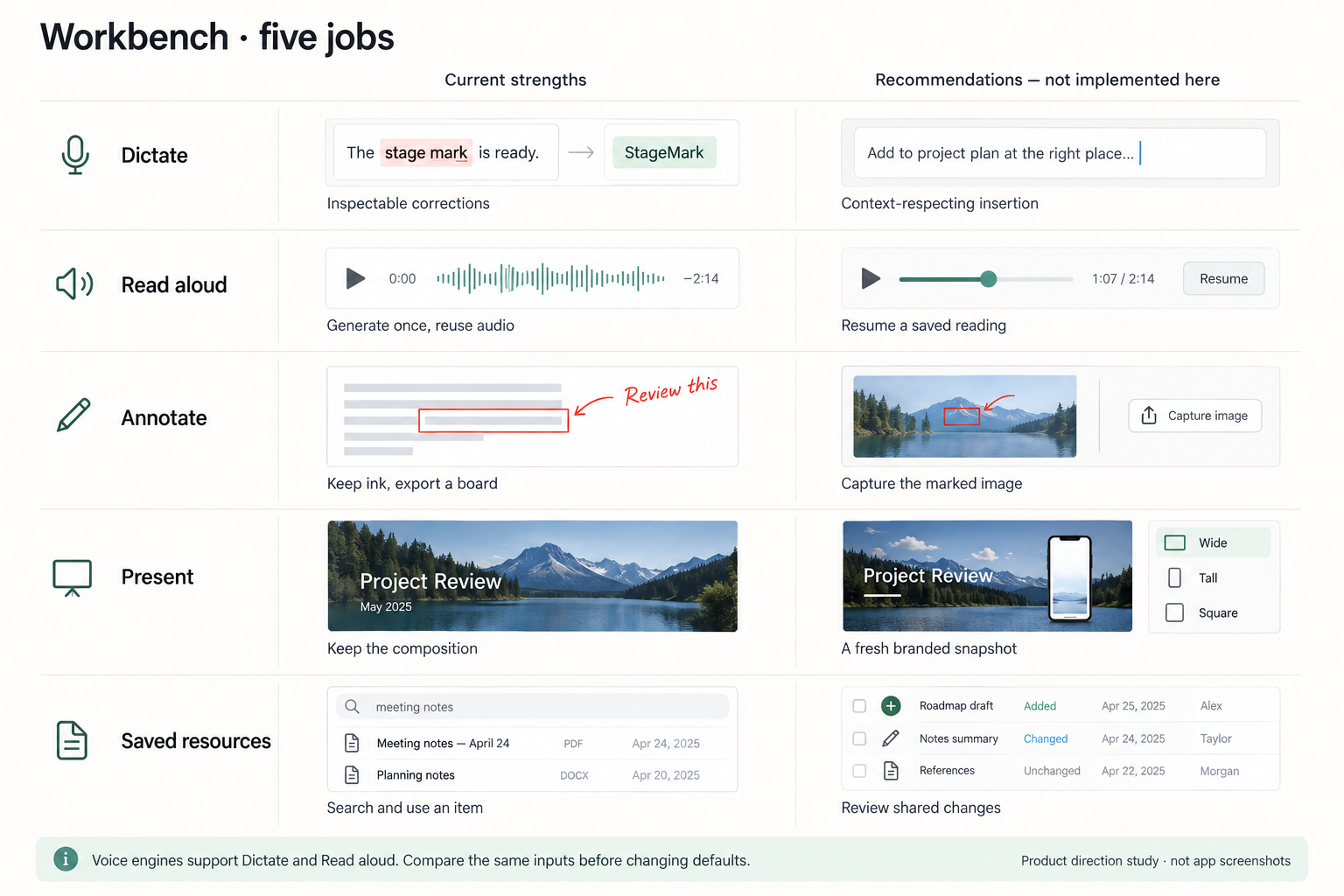
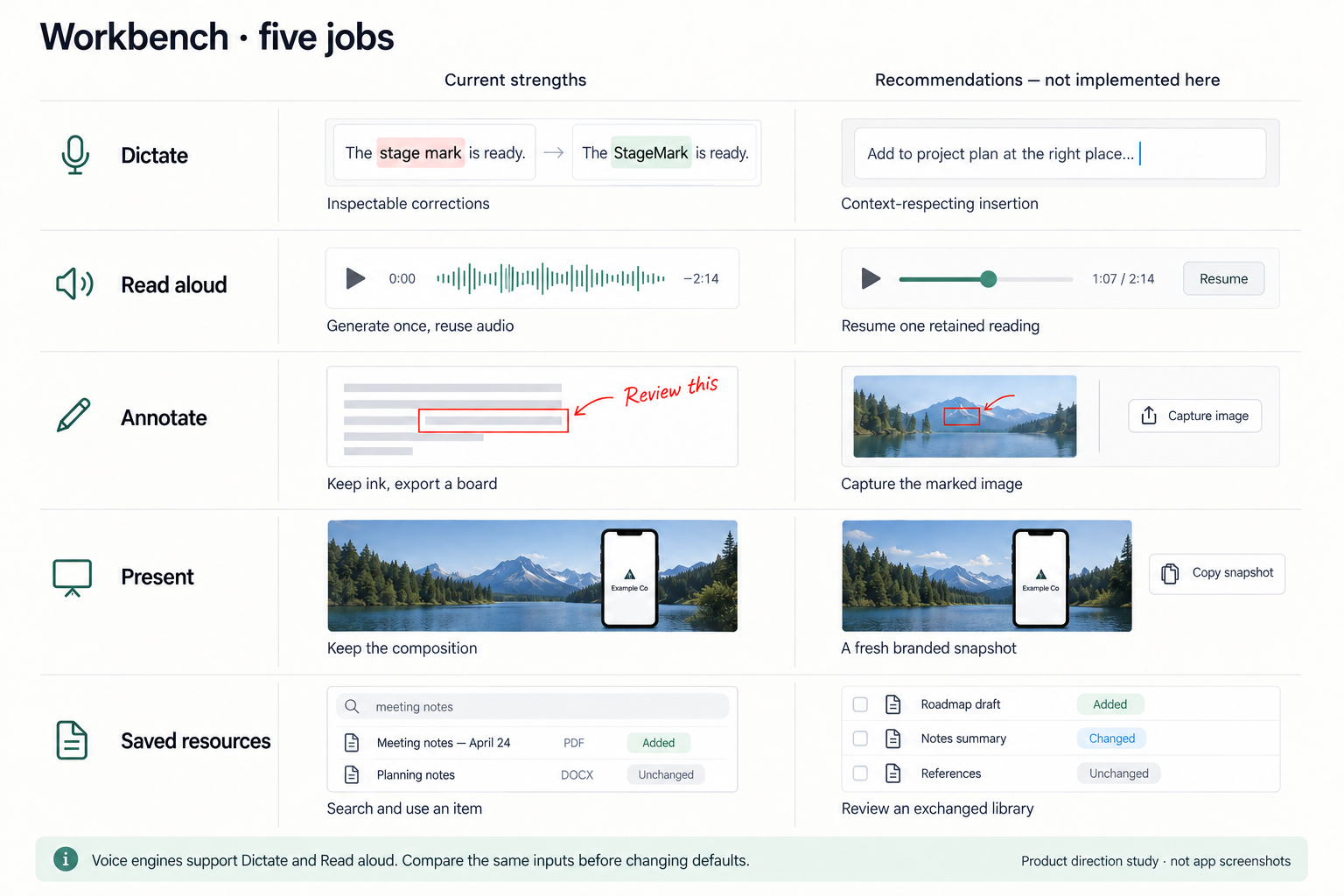
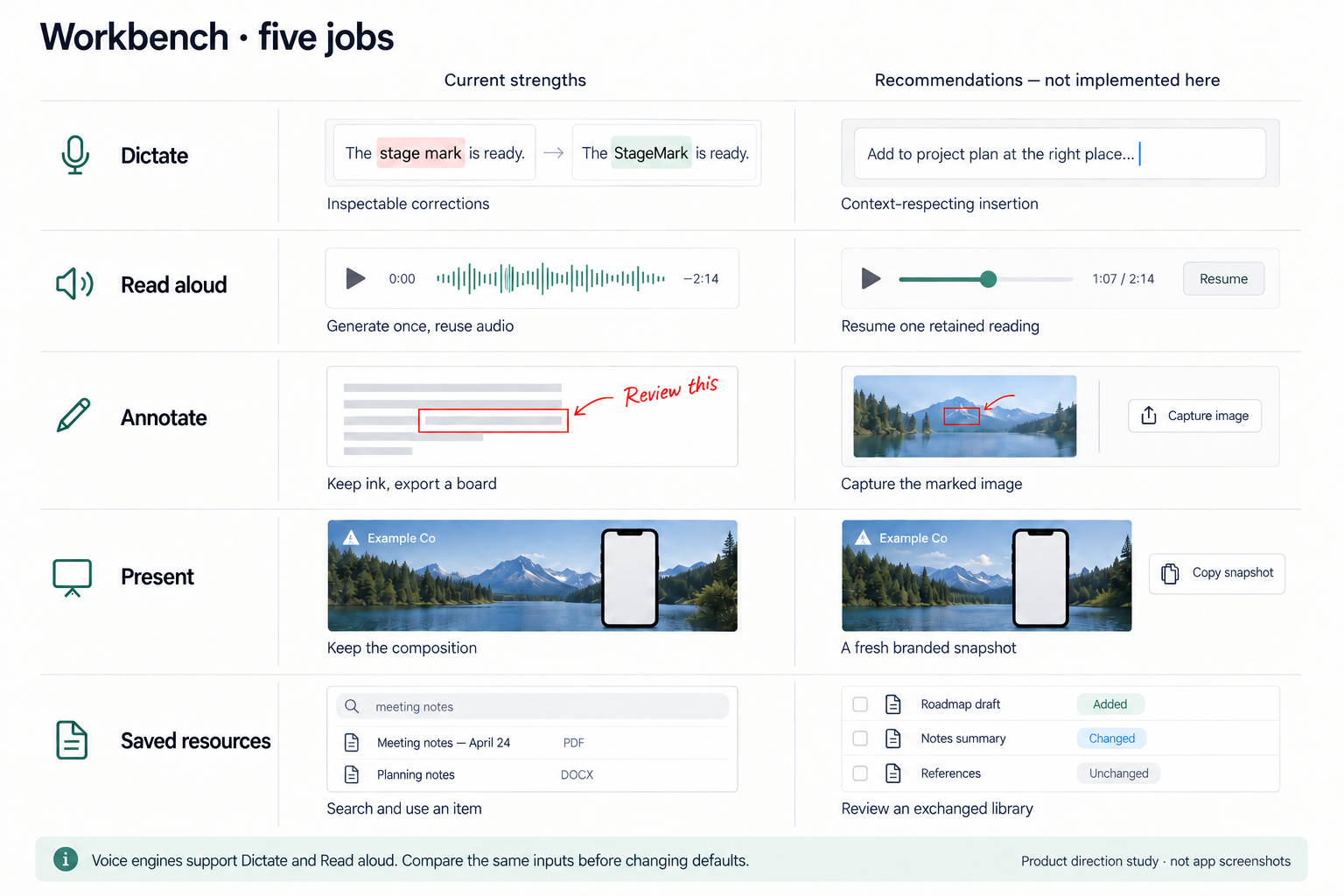
The advantage worth building is a dependable finished job. Individual features are easy to copy. These five directions build on the work already in the app; they are recommendations to validate, not claims of exclusive capabilities.
| Job | Current strength | One proposed direction |
|---|---|---|
| Dictate | Originals and inspectable personal corrections | Insert text naturally into its surrounding sentence |
| Read aloud | Generate once, replay and export | Resume one explicitly retained reading after interruption |
| Annotate | Retained ink and clean board export | Finish with a previewable marked screenshot |
| Present | Reusable device, brand and persona composition | Copy a fresh branded device snapshot for follow-up |
| Saved resources | Search, select and use a local item | Review changes when exchanging a library |
Keep reading retention to one deliberate item until repeated use warrants more. Validate a real library-exchange scenario before prioritising it over native Quick Look. Model engines support the voice jobs; same-input evaluations must justify changing defaults.
DESIGN RECORD
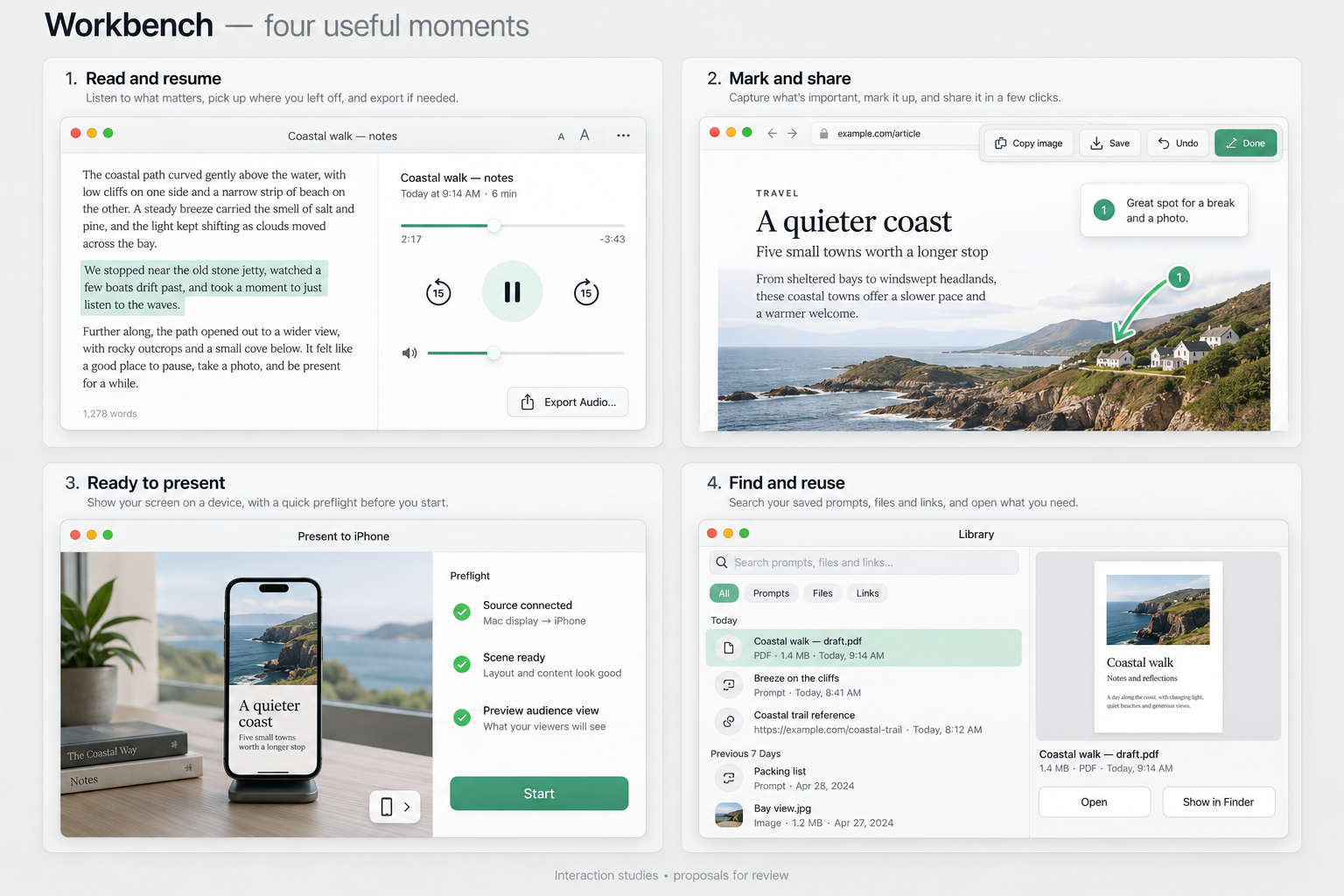
Superwhisper’s mini and full recording views show how much room a utility can give back. Raycast’s action panel keeps actions attached to a context. Apple’s popover guidance supports small anchored panels that preserve work when dismissed.
Workbench applies those ideas with click-to-open controls, keyboard alternatives and independent positions. It does not place dictation, presentation and unrelated modes in one floating picker.
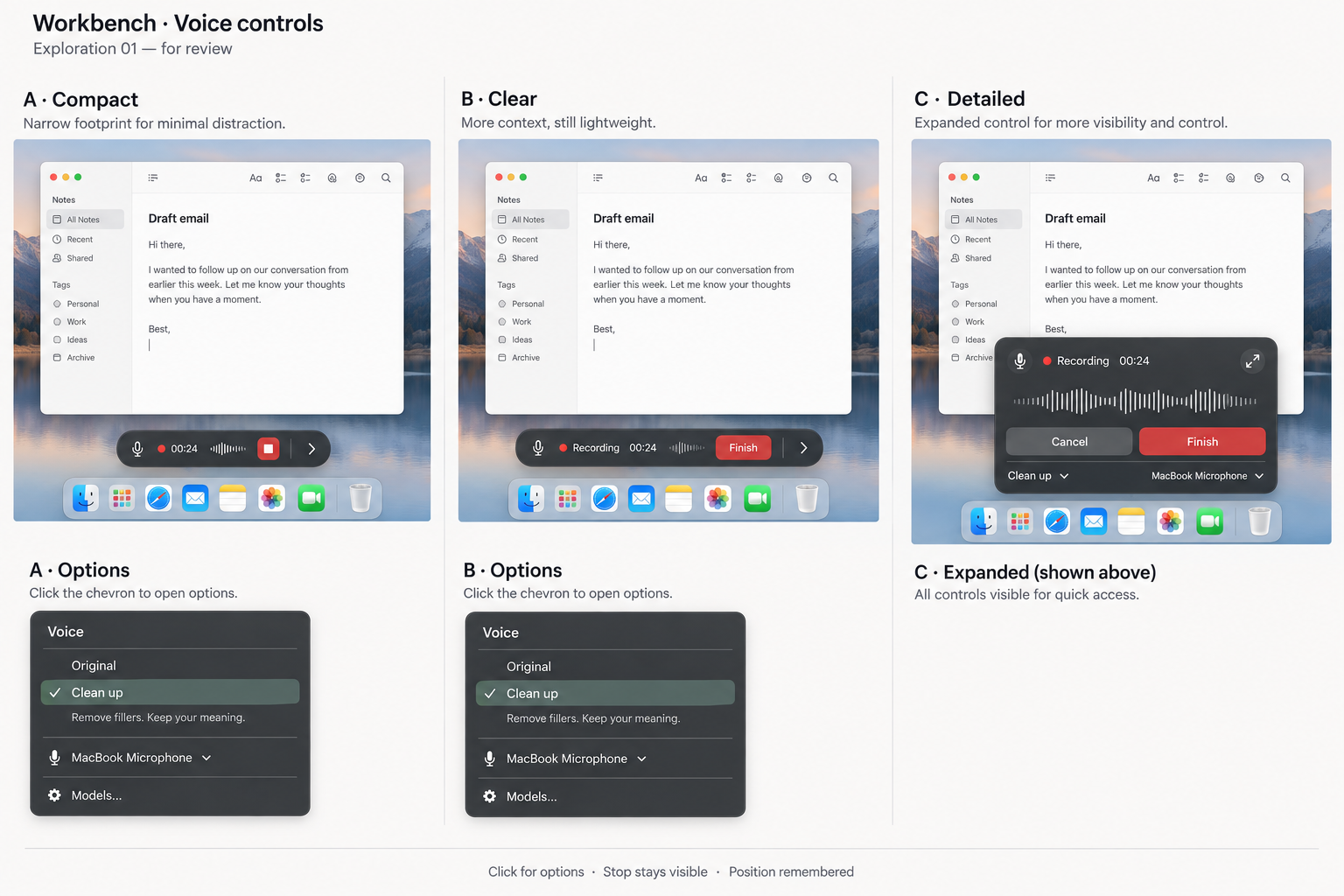
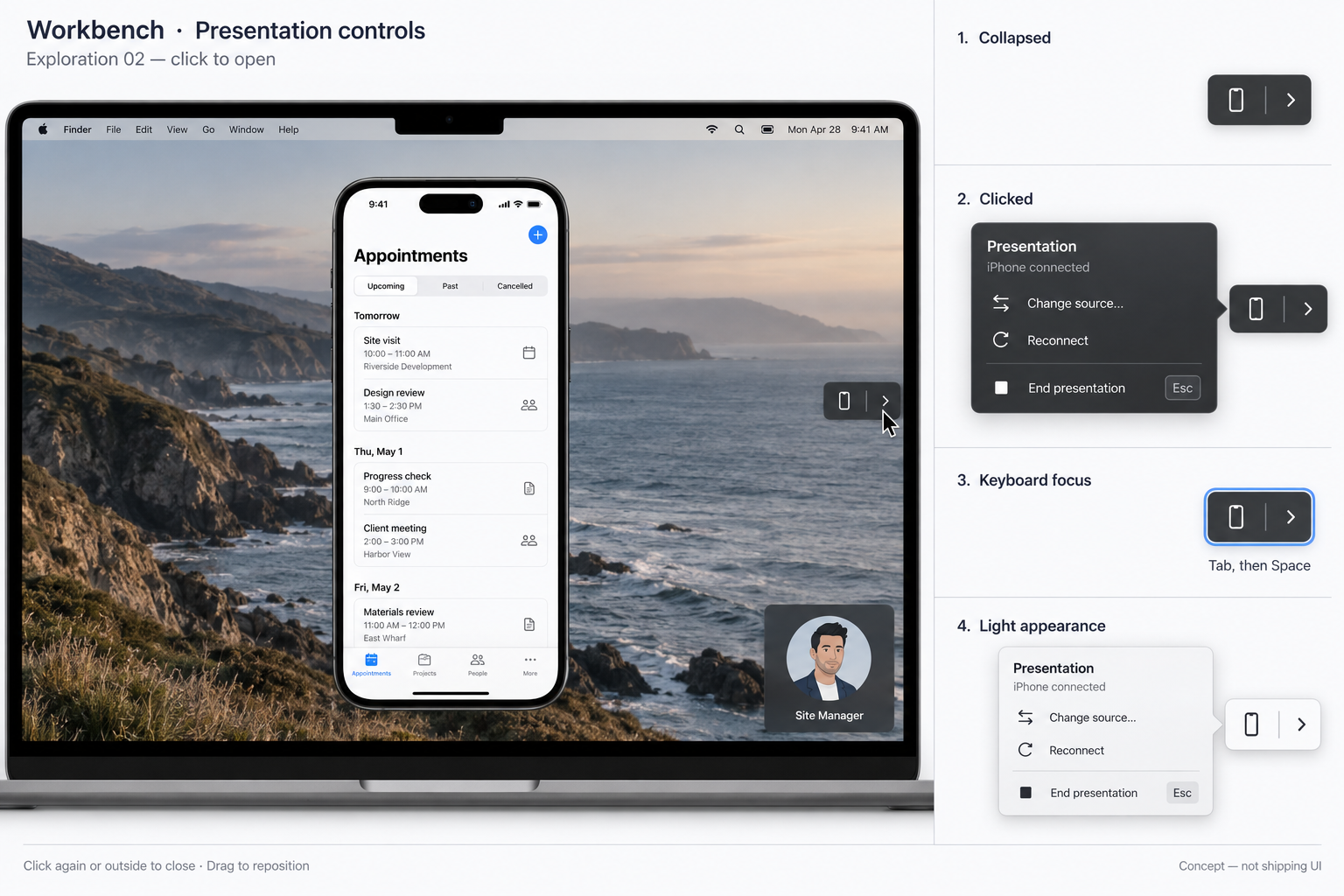
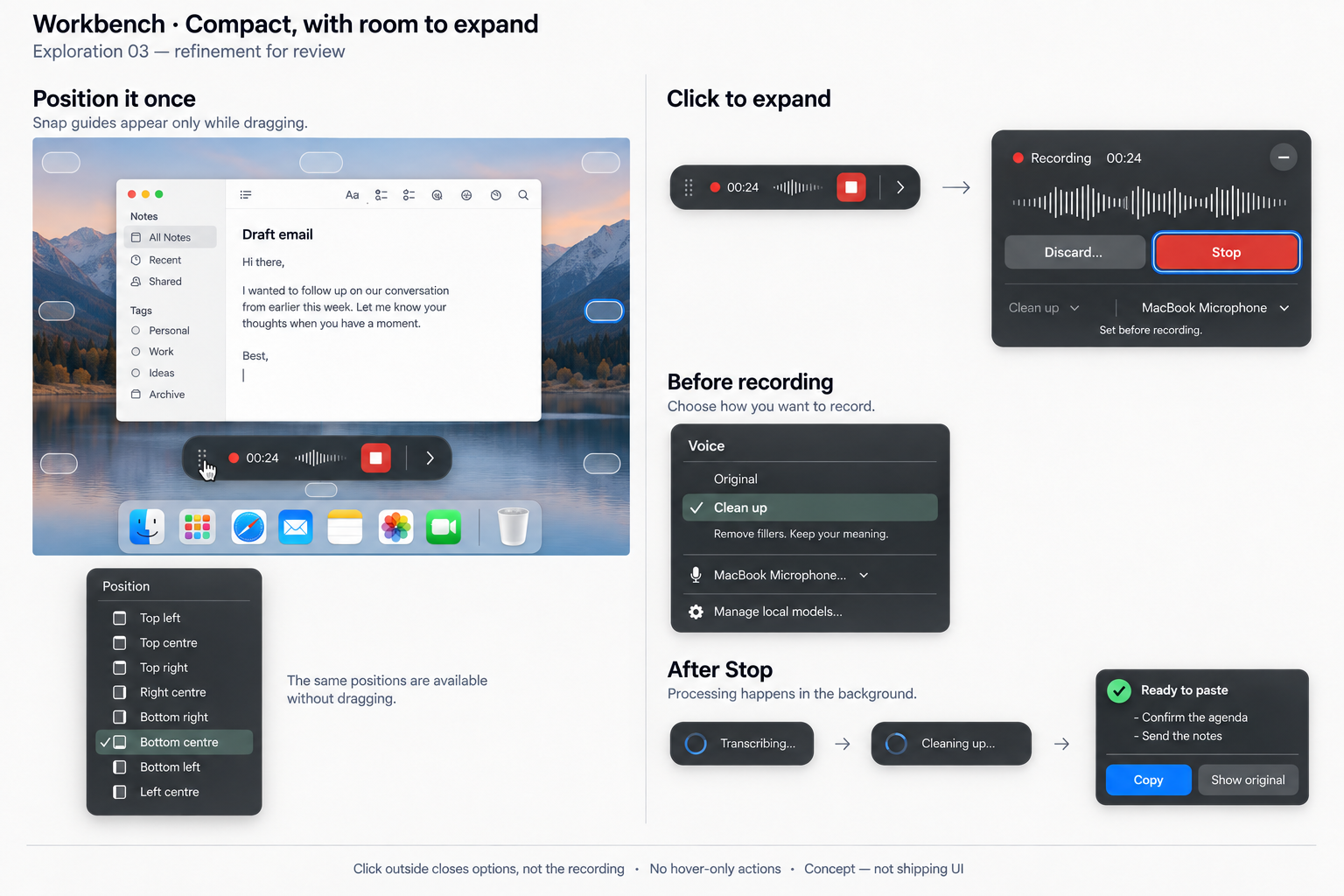
These are image-generated design studies, not shipping screenshots. Illustration details can differ from the implementation. In particular, changing settings never alters an in-flight recording. Read the interaction specification ↗
ACTUAL APP
These are captures of the signed Preview on a Mac. They show the implemented surfaces; the captions describe what each check establishes.
OPEN SOURCE, WITH INTENT
Ethan’s direction is shared maintainership with Matt. The working practice below is proposed for them to agree; it does not claim that GitHub permissions or branch protections enforce it. The project needs useful observations as much as code: the moment you expected something different is a good starting point.
AI assistance can write code and drafts. Maintainers remain responsible for the claims, tone, tests and decision to publish. AI-generated messages must not pretend to be a personal review by Ethan or Matt. Proposed replies stay drafts until someone authorises sending them.
Contributor guide ↗ · Issues ↗ · Merged Preview integration ↗
RELEASE RECORD
The public download is 2.0.0-preview.4, build 20260920065909, from source 95d5440. It combines the September contributions with easier Snap & Talk ordering, Read Selection and reviewed shared-library import. Earlier reading, annotation, scene and persona improvements remain included.
Preview 4 is Developer ID signed, notarized by Apple and stapled. The published ZIP was downloaded back and matched its SHA-256 checksum. Installation preserved the maintainer’s saved work, with the earlier app and data backed up. Mac, iPhone and iPad CI passed. Fresh-Mac first use, physical mobile dictation, paired scene transfer and meeting receivers still need independent acceptance.
Included in Preview 4: turn on Gentle motion in a scene, then Pause/Play it from the presentation controls. More beside the presentation buttons → Use as animated desktop creates a separate app-owned desktop layer with a still fallback. Receiver and multiple-display acceptance remain separate. See the actual app captures, platform limits and implementation →